
July 10, 2025: Heavy rain flooded Interstate 93 and closed both directions at Exit 3 in Milton. For a household finding water downstairs during heavy rain, travel conditions and basement conditions both need attention. The first useful report describes whether the lower level can be approached safely, whether water is still arriving and which rooms or stored belongings are affected. Removal planning begins with that practical picture.
Key takeaways
- Stay out of standing water where electrical or structural hazards may be present.
- Describe blocked access before arranging a property visit.
- Photograph visible entry points from a safe dry position.
- Keep wet storage separate from belongings that remain dry.
- Ask how renewed entry will be handled while removal proceeds.
Describe access before discussing equipment
The highway closure affected the area around Houghton's Pond and Ponkapaug Road. During another wet weather event, the homeowner's report should describe the route actually available to the property, including a closed road or inaccessible driveway observed at the time.
Scheduling decisions can then use present conditions rather than an assumed familiar approach.
Inside the home, the route to the basement matters just as much. Water on the stairs, a dark landing or wet equipment at the bottom can make an otherwise routine descent unsafe.
Occupants should describe those observations from a dry position and leave entry decisions to the appropriate professionals.
The basement water removal service can be planned more clearly when the team knows how the space is reached. A walkout door, an interior stair or a narrow storage passage should be reported as an observed feature of the property, with any obstruction described before equipment arrives.
- Report the usable entrance to the building.
- Explain any obstruction on the basement approach.
- Mention visible electrical equipment near water.
- Keep household members away from the affected level.
Record what changed as the rain developed
A short sequence helps an investigator understand the event. The owner can note when water was first noticed, where it was visible and whether the boundary continued to move.
Photographs from the same dry viewpoint are useful because they make later comparisons easier without requiring anyone to enter the flooded area.
The report should distinguish observations such as water below a window, a wet wall joint or a rising floor drain. Those details give the team separate places to examine.
A general statement that the basement flooded loses information that may help identify the entry route and the work needed to stop renewed wetting.
Rainfall may ease before the lower space stops receiving water. The person reporting the loss should say whether movement remains visible and whether another area became wet after the first photograph.
Changes can be added to the record as they occur, giving the responding team a current picture rather than a single early snapshot.
Let safety decisions set the removal sequence
A wet lower level can involve electrical equipment, unstable stored items or a contaminated water source. Each concern affects access and handling.
Occupants should avoid touching wet controls or entering the water to investigate a shutoff, and should explain the location of those controls to the professionals assessing the space.
The removal plan also needs to account for the condition of the surrounding structure and any water still entering. Technicians should determine an appropriate method and sequence before pumping begins.
The owner can ask where removed water will go and how the operation will be monitored while outside conditions remain unsettled.
Loose objects can move or conceal obstacles beneath the surface. A team assessing the basement needs to know about storage shelves, floor openings and equipment platforms that the owner remembers.
Supplying that description from upstairs helps the assessment without turning the homeowner into the person testing an unsafe route.
- Describe equipment and storage hidden by the water.
- Leave wet electrical controls untouched.
- Ask how continuing entry affects the removal plan.
Organize stored belongings by condition
A basement often serves several household functions, so the cleanup record should identify the use of each affected area. A storage corner, a finished room and a utility space can contain different materials and access needs.
The inventory should describe the actual items present and where they were found.
Photographs should show containers before their arrangement changes. Labels can connect the container, its contents and its original location, especially when wet cardboard no longer holds together.
The owner should ask the restoration team about appropriate handling before opening or carrying items that have contacted uncertain water.
Dry belongings moved to make working space deserve their own location. Mixing them with wet containers complicates later assessment and can spread moisture onto a previously dry floor.
A staging plan can provide separate areas for unaffected items, contents awaiting evaluation and material approved for removal.
Check edges after the visible pool is gone
The appearance of the basement changes quickly after standing water is removed, revealing joints, wall bases and surfaces that were hidden. This is the point to update photographs and compare the new view with the original boundary.
The team can examine where liquid traveled beneath coverings or into accessible wall spaces.
The water extraction process should leave a clear account of the areas treated and the surfaces needing further assessment. A remaining damp perimeter may require a different tool or limited access.
The owner should understand the purpose before additional finishes or stored fixtures are disturbed.
Any new inflow should be recorded separately from moisture remaining in materials. A fresh puddle at a previously cleared location changes the next action, while damp material may need continued drying.
Identifying which condition is present keeps attention on the current problem instead of repeatedly treating an unresolved source.
- Update photographs after the floor becomes visible.
- Recheck the original entry area.
- Identify hidden edges that remain inaccessible.
- Report fresh accumulation during the work.
Use the lower level as a measured drying area
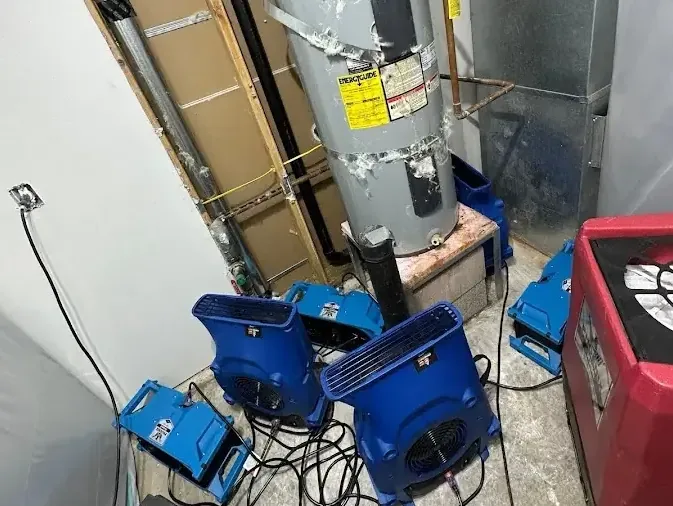
Retained walls and floor assemblies require their own moisture assessment after liquid removal. A technician can mark the measurement points and explain how the drying arrangement serves them.
The plan should also identify which part of the basement is being treated so an owner can understand why equipment sits in a particular location.
The structural drying work includes checking progress at those materials. A reading that changes slowly can prompt another look at access, air movement or continued entry.
The follow up note should connect that observation to a practical change, such as exposing an edge or revising equipment placement.
Household use of the basement should be discussed during the work. Access to storage or equipment may need a planned path, and belongings should stay clear of the drying setup.
The team should tell occupants how to report a new condition while maintaining the arrangement used to evaluate progress.
Keep recovery notes ready for the next rainfall
The closing record should distinguish the entry investigation, water removal and work on retained materials. A room sketch, before and after images and final readings allow the owner to follow the project without reconstructing events from memory.
Any outstanding drainage or building repair should appear as a specific next task.
Milton lies between the Neponset River and Blue Hills. For a particular home, the useful record is the location where water entered and the response taken there.
That property record can help the owner explain a recurring symptom to the contractor responsible for the next exterior or plumbing assessment.
Storage can be returned according to the condition of the space and the items approved for reuse. Keeping access to inspected joints and equipment makes later observation easier.
The homeowner can retain the photographs in the same folder as repair records so a future change can be compared with the condition at completion.
- Keep the entry photographs with repair paperwork.
- List remaining exterior or plumbing tasks.
- Retain the final basement material measurements.
Questions
What details help when basement entry is unsafe?
The accessible doorway, visible water boundary, nearby electrical equipment and any active flow are useful observations to report from a dry place. The team can use them to prepare for an assessment without asking the occupant to test the flooded route.
Should wet storage be carried upstairs immediately?
Contents handling should follow assessment of the water and the items involved. The owner can start an inventory with photographs while the restoration team determines how affected belongings can be moved and where they should be staged.
Why can removal pause while water is still present?
Safe pumping depends on the building conditions, continuing entry and the available discharge arrangement. A technician should explain the reason for the sequence and what needs to be resolved before the next portion of the removal work proceeds.
What shows that cleanup is ready for repairs?
The handoff should identify the treated surfaces, retained materials checked for moisture and any unresolved source work. A finish contractor can then organize repairs around the documented condition and the areas still needing attention.