Sewage Backup Cleanup in Milton, MA
Sewage in a room calls for immediate separation from living space. Milton mitigation crews contain Category 3 water, remove contaminated porous finishes and clean retained surfaces before starting measured structural drying.
(888) 480-6221Isolate the contaminated room
First steps for sewage backup cleanup in Milton
- Keep the area unused
Close access to the affected room and keep children and pets away. Avoid handling wet porous belongings before the contamination assessment.
- Reduce drain loading
Stop using fixtures that feed the suspected backup when safe. Tell the plumber whether other drains gurgle or release water during the event.
- Avoid household air movement
Do not aim fans across sewage or use an ordinary household vacuum. The mitigation crew establishes containment and appropriate equipment before removal.
- Record from clean ground
Photograph visible waste and water marks without crossing the contaminated floor. Note the first affected fixture and the time the backup was discovered.
What does sewage backup cleanup cost in Milton, MA?
Sewage-backup restoration commonly costs $2,000 to $8,000 or more. Contaminated floor area, porous-material removal, cavity access and disposal requirements shape the price. Drain repair and reconstruction should be identified separately in the written scope.
- Protective containment
- Sewage extraction
- Accessible surface cleaning
- Controlled material removal
- Waste handling
- Structural drying
- Multiple-room controls
- Concealed cavity access
- Expanded disposal record
Cost factors: Water category, wet square footage, material class and the time before drying starts shape the scope. Access beneath cabinets, retained insulation and multiple affected levels increase the work.
Use the water damage cost calculator to compare conditions. These typical ranges are planning estimates, not a quote for the property.
How sewage backup cleanup proceeds
Separate clean and dirty zones
The technician maps the contaminated footprint, establishes protective access and coordinates drain-source investigation while documenting porous finishes and belongings reached by the backup. The access plan identifies household routes that must stay clear and any neighboring spaces needing protection during removal of waste-bearing materials.
Remove sewage and porous waste
The crew extracts waste-bearing water with suitable equipment and removes contaminated porous materials above the visible wet boundary where inspection shows wicking or concealed exposure. Photographs and disposal notes preserve the reason for each removal, including contaminated insulation and finishes that absorbed water beyond the pooled area.
Clean and apply treatment
The mitigation team removes residue from retained surfaces, then uses an EPA-registered antimicrobial according to the label, maintaining required dwell time before proceeding with drying. The contractor checks the exposed joints and recesses for remaining residue, keeping the treatment stage separate from the mechanical removal of debris.
Dry and record retained structure
The drying specialist measures the exposed assemblies, adjusts equipment as moisture falls and records the final condition with disposal notes, photographs and the remaining reconstruction scope. The handoff explains which structural surfaces remain and what reconstruction is needed, while the plumber supplies the separate source-correction record.
A sewage backup is Category 3 from the start. The work begins with exposure control, not with fans pointed at the wet floor. The restoration contractor establishes the contaminated boundary, assesses the drain source and protects a route for removing water and debris without carrying contamination through the home.
Sewage requires controlled access before any drying setup. Describe affected drains and the rooms reached without entering the contaminated area.
(888) 480-6221Isolate the contaminated roomDefining the sewage cleanup boundary
Milton pays MWRA to treat the town's sewage. A backup inside a building still needs investigation of the actual obstruction or failure. The plumber evaluates the drain system while the mitigation team checks where escaped waste reached flooring, walls and stored items.
- Keep occupants and pets out of the affected rooms.
- Stop using fixtures that add water to a backing-up drain.
- Report sewage entering through more than one opening.
- Avoid spreading contamination with household fans or vacuums.
In Lower Mills, Milton Village or along Canton Avenue, the contractor needs the building entrance and affected level to plan access. The room layout determines where clean and dirty work routes can be separated, especially when a narrow hall connects the loss to occupied space.
Removing porous material and cleaning the structure
The crew wears protective gloves, boots, eye protection and other task-appropriate PPE. Contaminated carpet, padding, drywall and insulation require removal where effective cleaning cannot reach the absorbed waste. The technician checks above the visible water mark because moisture and contamination can wick into porous material.
Removal exposes retained structural surfaces for cleaning. The contractor removes deposited soil first, then applies an appropriate EPA-registered antimicrobial at the label concentration and dwell time. A product sprayed over debris cannot substitute for cleaning, and drying contaminated porous finishes is not an acceptable replacement for removal.
- Containment separates debris handling from household traffic.
- Bagging and transport routes reduce tracking into clean spaces.
- Cabinet bases and concealed cavities need direct assessment.
Drying after contamination control
The drying specialist sets equipment after the retained surfaces are cleaned and the active source is corrected. Moisture readings track the floor assembly, framing and wall edges. The team adjusts airflow and dehumidification where dense or enclosed materials retain water, recording each change in the work log.
The EPA cleanup information for flooded homes describes contaminated-water considerations. The Ready.gov flood safety page covers avoiding unsafe water and following emergency instructions. The contractor documents the observed backup route and work rather than assigning drain responsibility without an inspection.
24/7 dispatch supports urgent sewage assessment in Milton. The homeowner keeps a safe distance, reports affected fixtures and preserves photographs from outside the dirty area. Insurance questions should identify sewer-backup coverage specifically when the policy is reviewed.
Sewage Backup Cleanup and the IICRC S500 standard
Moisture measurements
The technician compares wet materials with an unaffected reference of the same kind. Surface touch alone cannot show whether the full assembly has reached its drying goal.
Equipment adjustment
The drying team records temperature and relative humidity, then adjusts airflow and dehumidification when a cavity or dense material stops improving. Equipment stays until readings support removal.
Written progress
The restoration contractor records the initial condition, removal decisions and final readings. A dated record helps the homeowner understand what remains before repairs close the affected area.
Safe work boundaries
The response team separates wet work from occupied rooms, checks equipment power requirements and keeps exit routes open. Occupants keep children and pets clear of hoses and cords.
Sewage Backup Cleanup service in Milton
Water damage service covers ZIP 02186, including Brush Hill, Milton Hill, Milton Village and Lower Mills. Describe the building entrance and affected level when arranging access.
Sewage Backup Cleanup questions in Milton, MA
Why is sewage Category 3 immediately?
Sewage contains contaminants that require protective handling from the start. The crew contains the area, uses appropriate PPE and removes affected porous materials before cleaning retained structure. Clear appearance or limited depth does not reduce that initial classification.
Can wet drywall be dried instead of removed?
Drywall contaminated by sewage cannot be treated like a fresh clean-water loss. The contractor checks wicking and concealed exposure, then removes affected porous material so retained structural surfaces can be accessed, cleaned and dried.
Does antimicrobial replace cleaning?
No. The crew removes deposited waste and soil first. A suitable EPA-registered product follows at the label concentration and dwell time. Treatment over dirty debris does not provide the same access or cleaning result.
Should the household use other bathrooms?
A plumber determines which fixtures can operate without worsening the backup. Report any gurgling or water rising at other drains. Until the source is understood, adding water to the affected drainage route can increase the indoor loss.
How are unaffected rooms protected?
The mitigation team establishes clean and dirty routes, controls debris handling and keeps contaminated equipment away from household traffic. The exact containment arrangement depends on the room connections and access available at the property.
What insurance question matters for a backup?
Ask whether the policy includes sewer or drain-backup coverage and what documentation is required. The contractor provides the observed source route, photographs and work scope. The insurer applies the policy terms and decides the claim.
Related water damage services
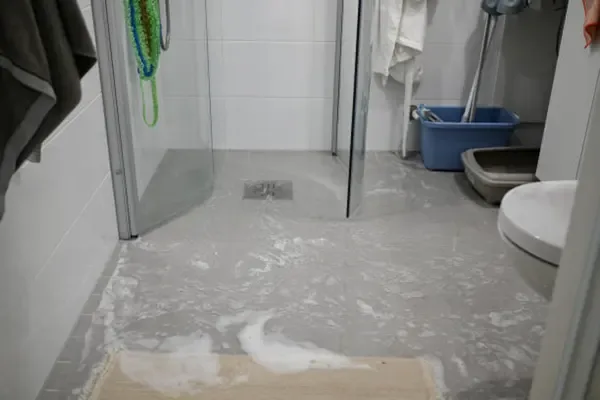


Contain, remove and clean before drying
The mitigation crew documents porous-material removal and the measured recovery of retained structure.