
Stopping a leaking pipe answers an urgent question, but a homeowner still needs to know what happens to the water already inside the building. Milton Inspectional Services administers state building, electrical, plumbing and gas codes as well as the town zoning bylaw. After a pipe release, the repair contractor, restoration team and finish contractor should each leave a clear account of their work so the next person can proceed with the right information.
Key takeaways
- Have the appropriate trade identify and correct the failed component.
- Photograph the water route separately from the pipe repair opening.
- Assign permit and inspection questions to the contractor responsible for the proposed work.
- Request a material drying record before concealed areas are closed.
- Use a written handoff to connect source repair, mitigation and finish replacement.
Begin with the flow and the safe route to it
The first report should state whether water is still escaping and where it is visible. An accessible shutoff can be used only when the approach and control are safe.
Occupants should avoid reaching through water or touching wet electrical equipment while trying to stop the flow, and should describe those access concerns to the responding professionals.
The owner can identify the rooms involved from a dry area and note whether water has reached a lower level. A source in a wall, a ceiling or a service space may require different access.
The repair professional needs those details before deciding how to reach the component and correct the active release.
The burst pipe water damage service addresses the interior consequences alongside source control. The opening account should preserve the sequence: discovery, any safe shutoff action and the conditions observed afterward.
That short record helps later contractors understand which work happened before they arrived.
- State whether flow remains active.
- Identify wet areas without entering unsafe spaces.
- Record any shutoff action already taken.
Give the plumber a component specific record
The source report should identify the pipe or connection inspected, its location and the repair performed. Photographs taken before and after the work help connect the written description to the actual component.
If an opening was needed for access, its room and position should appear in the same record.
A repair invoice becomes more useful when it distinguishes the diagnosed problem from the method used to reach it. The homeowner can ask for that distinction in plain language.
It explains why an opening exists and helps a finish contractor distinguish the access work from surfaces affected by the escaped water.
Milton purchases water from MWRA, supplied by Quabbin Reservoir and Wachusett Reservoir. For a household pipe release, the repair contact still needs the specific component finding at the property.
The owner can keep any utility communication with the incident file while the contractor documents the work on the building's affected plumbing.
Attach approval questions to the planned repair
Inspectional Services is the local office administering the relevant state codes. The contractor should clarify which requirements apply to the actual proposed plumbing, electrical or building work.
Asking that question with a defined scope is more useful than asking whether an entire water damage incident has a single approval requirement.
The owner should know who is responsible for any application, required inspection and notice that the work is ready for inspection. Those assignments can be recorded beside the repair schedule.
When several trades are involved, each should identify the approval tasks attached to its own portion of the project.
A needed inspection may affect when a wall or ceiling can be closed. The project contacts should communicate that dependency to the finish contractor before closure is scheduled.
Keeping the requirement visible prevents the owner from discovering an unresolved access need after a new surface has already been installed.
- Define the repair scope before asking approval questions.
- Identify the contractor handling any application.
- Record an inspection dependency before finish closure.
- Keep approval documents with the relevant trade report.
Map the water beyond the plumber's opening
The source opening reveals where the plumbing was accessed. The water assessment must also follow the surfaces reached by the release, including floor transitions, wall bases and lower rooms where appropriate.
A sketch can connect those locations while keeping the original repair opening easy to identify.
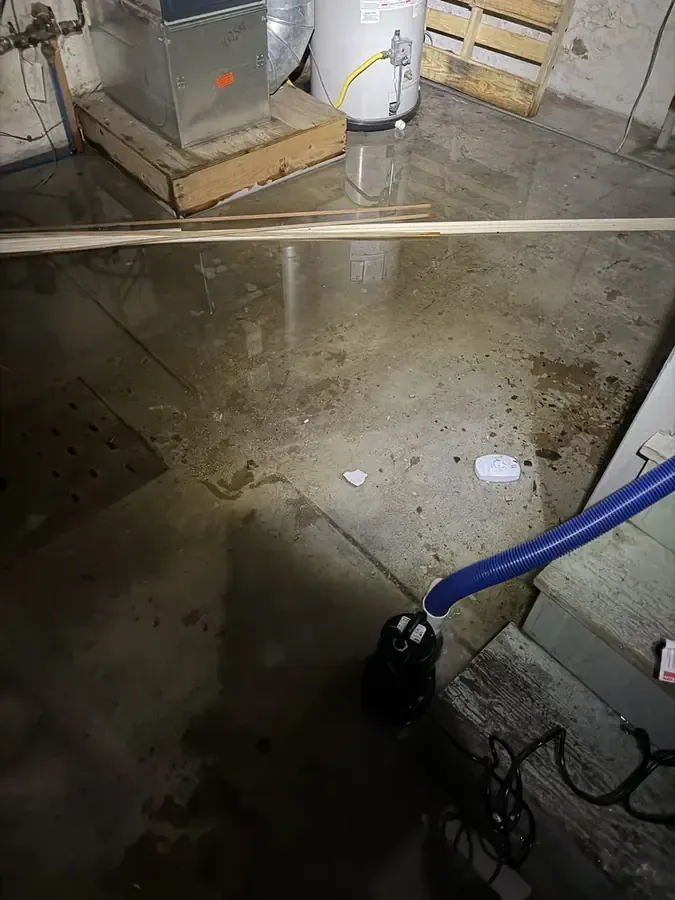
The water extraction service should describe the accessible liquid removed and the areas that need further inspection. An extraction note linked to the room sketch helps the owner understand why work extended away from the repaired pipe.
It also gives the drying technician a clear starting record.
Contents moved for access should remain associated with their original room. If moving an object reveals another wet surface, that observation should be added to the assessment.
A changing work boundary can then be explained through the newly visible condition instead of appearing as an unexplained expansion of the project.
Name the reason for each mitigation opening
Restoration access may be needed to remove water, inspect a cavity or expose retained material for drying. The scope should identify which purpose applies to a proposed opening.
An owner can then understand the relationship between the observed wetting and the portion of the finish selected for disturbance.
The same opening may serve both the plumber and the restoration team, but their findings should remain distinguishable. The repair photograph identifies the component work, while the material photograph shows the wet assembly and retained surfaces.
Keeping both views helps the next trade avoid guessing what happened behind the finished face.
Before material is removed, the owner should receive a record of its condition and the proposed action. Retained decorative pieces can be labeled for later assessment or reinstallation.
Replacement decisions should identify the affected portion so a finish proposal can be compared with the opening photographs and removal notes.
- State the purpose of the access opening.
- Photograph the retained assembly inside it.
- Keep trim selected for reuse clearly labeled.
Require a material handoff before reconstruction
A repaired pipe can stop adding water while the surrounding construction remains wet. The structural drying service should identify retained materials and track their progress at repeatable locations.
The record needs enough room context for a finish contractor to understand which surfaces were checked before reconstruction starts.
The technician should explain changes in the equipment arrangement through the material findings. An inaccessible corner, a slow drying edge or a new observation may prompt another action.
The owner benefits from knowing the reason and the result, rather than receiving only an equipment count with dates attached.
When the drying work is complete, the handoff should list the assessed materials, final condition and any item still awaiting another trade. That last category might involve source inspection or a remaining access requirement.
Assigning it explicitly prevents the finish contractor from interpreting a drying visit as approval to close every opening.
Build the finish scope from the completed records
The finish contractor should be able to compare the original room, the access work and the condition ready for repair. That comparison supports a scope describing reinstallation, patching, replacement and surface preparation by location.
The owner can ask for any proposed work beyond those documented areas to have its own explanation.
Milton Village lies at Lower Mills, and the Suffolk Resolves House is on Canton Avenue. The property record should be just as precise about its own interior locations: the room, wall and opening involved.
Consistent labels let different trades communicate clearly even when they attend on different days and use different descriptions of the building.
At closeout, the owner should receive an organized set of source repair, approval, mitigation and finish documents. Remaining work should have a named contact and a practical next action.
The file then explains the project from the first escaped water through the final room repair without relying on any contractor's memory of an earlier visit.
- Compare the repair proposal with opening photographs.
- Match remaining tasks to the responsible contractor.
- Retain final material notes and inspection records.
- Use the same room labels throughout the file.
Questions
Which contractor should answer permit questions after a pipe leak?
The trade proposing the regulated repair should explain the applicable requirements and who will handle any application or inspection. A defined work scope allows the local office and contractor to address the actual task involved.
Why does extraction extend beyond the plumbing access area?
Escaped liquid can reach connected surfaces away from the component that failed. The assessment should show that route through room photographs and measurements so each treated area has an understandable connection to the release.
What belongs in a drying handoff to the finish contractor?
The handoff should locate the materials assessed, summarize their final condition and identify openings still needed for another task. That information allows finishing to be scheduled around actual project dependencies.
How can a homeowner keep multiple invoices understandable?
Each invoice can be filed with its corresponding photographs and findings: source repair, mitigation or finish restoration. Shared room labels connect the records while preserving the contractor responsible for each decision and remaining task.