
Dedham documented sewage backups into homes, onto properties and along nearby roads in its sewer inspection project area. The project covers the Manor neighborhood and portions of Oakdale and Greenlodge, and identifies sump pumps and exterior roof drains connected to the sanitary sewer as prohibited connections. For a household experiencing an indoor backup, the immediate priorities are restricted access, a clear report of fixture symptoms and coordinated work on the source and affected interior.
Key takeaways
- Keep people and pets away from sewage affected rooms.
- Report which fixtures are involved and whether water is still rising.
- Avoid running additional fixtures while a backup is being assessed.
- Keep the municipal inspection record separate from the household cleanup inventory.
- Ask for the material removal, cleaning and drying decisions to be documented.
Use the town project record for the right conversation
July 15, 2024: Door to door sewer inspections began in the designated project area. The municipal program gives owners a place to discuss the connections covered by that inspection.
The household can retain its notices and inspection correspondence so questions about the property's participation are directed to the appropriate project contact.
An active indoor backup requires a current account of what is happening at the fixtures. The owner should describe the affected room, where water first appeared and whether additional fixtures show symptoms.
That report belongs with the plumbing and cleanup response, giving the people attending the property specific observations to evaluate.
The sewage backup cleanup service addresses the affected interior after access and source conditions are assessed. The municipal project record and the incident record can remain connected in the owner's folder while preserving the distinct actions assigned to the town, the plumbing contractor and the restoration team.
- Keep municipal correspondence in the property folder.
- Write a separate account of the current fixture symptoms.
- Identify the contacts handling inspection and cleanup.
Describe the pattern without testing more fixtures
A toilet overflow, a floor drain discharge and water appearing at several fixtures give a plumber different observations to investigate. The owner should report the pattern already visible and avoid creating additional wastewater while the condition is assessed.
Running a tap or flushing again can add to the water that the team must manage.
Useful details include which fixture changed first and whether another area became involved afterward. If the owner heard drainage sounds or noticed water rising before the spill, those observations can be added to the sequence.
A straightforward account is more useful than a guessed explanation that obscures the original symptoms.
The property contact should also mention any work already attempted, including a previous contractor visit or a fixture taken out of use. The responding professional needs to understand the present arrangement.
That history can be provided verbally from a clean location while access to the affected room remains restricted.
Keep the affected room out of household circulation
Occupants should stay away from sewage and avoid handling contaminated possessions or surfaces. A room boundary should prevent people and pets from walking through the area on the way to another part of the home.
The team can help identify a practical route for essential household movement during the cleanup.
Items at the edge of the affected space should be assessed before they are carried into a clean room. A wet container can transfer contamination along a familiar path even when its contents appear protected.
The owner should describe priority belongings to the restoration team and allow handling to follow the cleanup plan.
The Manor lies south of Sprague Street, while Greenlodge follows the axis of Greenlodge Street. For a responding crew, the important property details are the accessible entrance and the rooms involved.
Giving those directions clearly helps keep equipment and contents movement aligned with the intended work boundary.
- Close off the affected area from ordinary foot traffic.
- Report essential items that need professional retrieval.
- Keep pets away from cleanup routes.
- Avoid moving wet containers into occupied rooms.
Agree on contents decisions before removal
The inventory should show which belongings contacted sewage and where they were located. Photographs can connect an item to the affected floor or fixture area before it moves.
The restoration team should explain the proposed handling according to the item's materials, exposure and suitability for the available treatment.
Porous possessions, layered furniture and enclosed storage can require different decisions from accessible hard surfaces. The owner should receive an understandable account of what can be assessed for retention and what is proposed for removal.
Approval and documentation should be organized before disposal so the inventory remains complete.
Items awaiting an owner's decision or specialist evaluation need a clear status and a suitable holding arrangement. They should remain separate from unaffected possessions.
A label connecting each object to its photograph and original room lets the project contact resolve questions without reopening containers or moving them through the home again.
Separate the drain correction from interior treatment
The plumber's findings should describe the source condition and the action taken to restore appropriate drainage. The cleanup report should describe the rooms, surfaces and materials affected by escaped sewage.
Keeping both records available helps the homeowner understand what corrected the drainage problem and what restored the interior work area.
If the incident began at a toilet, the toilet overflow cleanup service explains the related fixture focused work. The actual scope still follows the extent of the affected area.
Water that has reached a doorway or adjoining room needs to be included in the inspection and handling plan.
The municipal program identifies sump pump and exterior roof drain connections to the sanitary sewer as prohibited. Questions about a connection found during inspection belong with the town and the appropriate contractor.
The indoor project can record that communication while keeping its own removal, cleaning and material decisions clear.
- Collect the plumbing source finding.
- List rooms reached by the discharge.
- Record connection questions referred to the municipal contact.
Document treatment before retained materials are dried
Removal and cleaning decisions should be resolved before the project treats the affected area as an ordinary drying space. The restoration team should identify which materials remain, what treatment they received and which surfaces still require access.
That sequence gives the owner a practical explanation of the work performed inside the boundary.
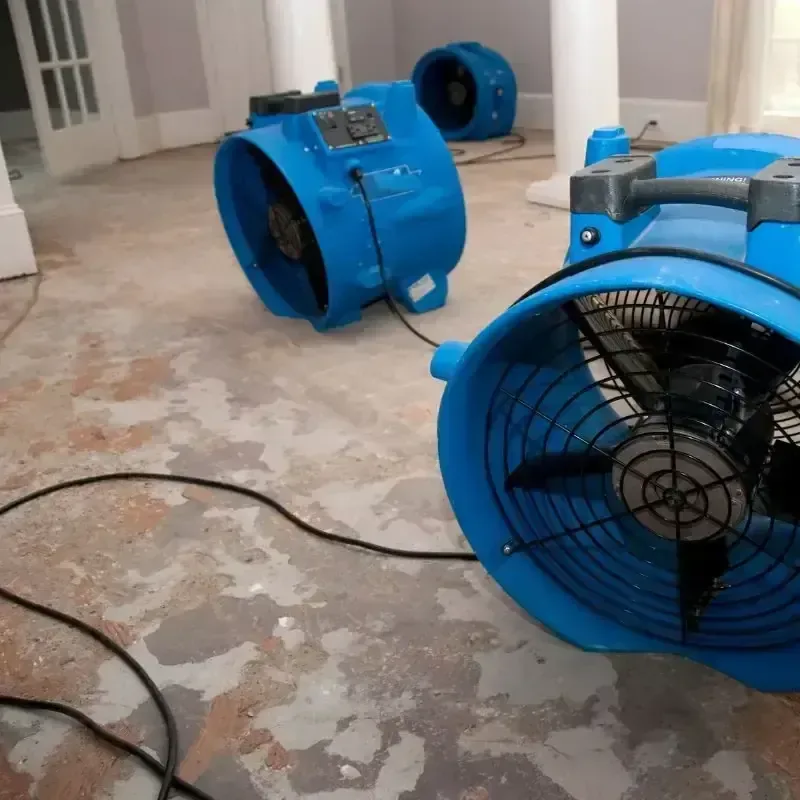
For materials approved to remain, structural drying can then follow moisture at identified locations. The drying notes should connect to the retained materials list.
A technician can explain how the setup serves those surfaces and whether an enclosed edge needs further inspection to support the plan.
Progress photographs should show the room after removal and cleaning as well as during equipment operation. These views help the repair contractor understand the substrate that will receive the new finish.
They also preserve the difference between a surface selected for retention and a space left open for later replacement.
Leave the owner with a complete room status
Before the work boundary changes, the project contact should explain the completed treatment, the remaining repair and any restrictions still affecting access. A simple room status note makes that conversation concrete.
The owner should know which fixtures are available and which professional is responsible for any continuing drainage concern.
The final folder can include municipal notices, the plumbing report, contents decisions and the interior treatment record in separate sections. Each document should be labeled by its purpose.
This makes later conversations with contractors or a carrier easier because the owner can locate the relevant observation without treating every paper as a cleanup invoice.
Any unresolved item should have a next action and contact, whether it concerns a connection inspection, a contents decision or a finish replacement. Household routines can be reorganized around those remaining tasks.
Clear assignments keep the project moving after the most visible cleanup equipment has left the home.
- Confirm the usable fixtures and accessible rooms.
- Retain the contents disposition list.
- Identify remaining inspection or plumbing work.
- Give finish repairs a room specific scope.
Questions
Which neighborhoods are included in the Dedham inspection area?
The project covers the Manor neighborhood and parts of Oakdale and Greenlodge. An owner can use the municipal project correspondence to resolve questions about the property's inspection while reporting an active indoor backup separately.
What fixture information should a household report first?
The responding plumber needs the first affected fixture, any additional outlets showing symptoms and whether water continues to rise. The homeowner should describe what has already occurred and leave further testing to the professional.
Can wet belongings be moved into a clean bedroom?
The cleanup team should first determine suitable handling and staging for affected items. Keeping them within a controlled route and separate holding area helps protect the rooms that the household is still using.
What distinguishes the cleanup report from the drain invoice?
The cleanup report follows affected contents and building surfaces through removal, treatment and drying. The drain invoice records the contractor's source assessment and repair, allowing the owner to see the responsibilities associated with each part of the incident.